The Places We Pray

Sometimes I pray in our home prayer room. 

It is a place of colorful prayer rugs each with a history known only to our family, including ones that belong to family members who have passed on and whose rugs give us a reminder to make du`aa for them and also a reminder that we, too, will join their ranks. Every prayer could be our last.

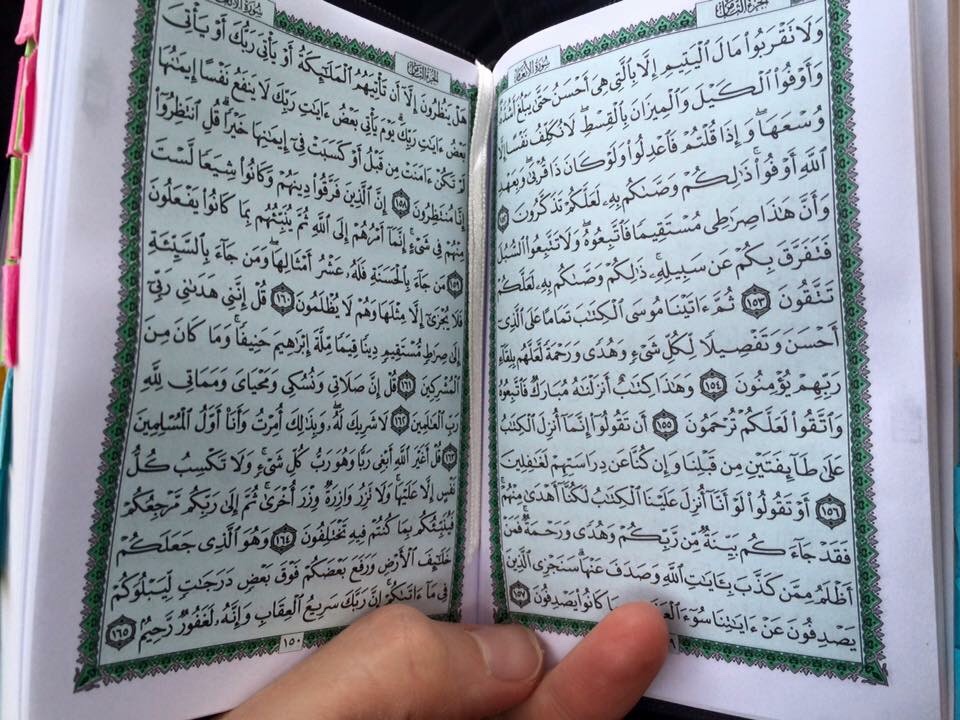
There are prayer scarves in drawers,but also draped over chairs, dropped on floors… and I don’t care because their presence here and there tells me that someone has been praying. There is calligraphy on the walls, there are beadsin a bowl, and a spiral-bound Qur’an on a stand.

This space is our declaration that prayer is important in this home. It is where we hear each other recite the Qur’anand shake each other’s hands when we are finished. It constantly calls us to remembrance andgoodness and peace.

Sometimes I pray in my bedroom prayer space.

It is a dark, quiet, small corner. I keep a small, child-size prayer rug there to mark the spot but it is otherwise unremarkable and unembellished. It is the place I pray when I am ill or overwhelmed or need the seclusion that mothers so often lack but so desperately need. This is the only place I can crumble into the floor in secret tears and utter defeat before Allah to ask for His help. This is often the only place I can linger after my prayer because it is in the far end of my home where nobody thinks to look for me right away.

Sometimes I pray in my local mosque.

I have a lot of issues with this place. It has not always been easy for me to attend but I have pushed forward for the sake of my children if nothing else. Having lived part of my life in a community with no mosque at all I know it is ablessing to have one . There is new carpet and new leadership which gives me hope. It is a familiar second home to me even withthe struggles and imperfections. The carpet, the walls, the tiles, the voice of the imam, the way he leads theprayer, the voice of the man who gives the adhaan and their unique styles of recitation are all “old friends” even if they’re not YouTube stars or my preferred recitation style or even using correct tajweed.

I remind myself to look around at jumu`ah and appreciate all the women in the room- to make note of the myriad ethnicities, ages, languages, educational backgrounds, and life histories thatstand with me. Islam is for all times,all people, and all places! I absorb the colors and styles, and yes even the varying levels of practice because all that matters in this moment is that we came to the masjid right now and brought with us the seed of faith in our hearts to be nurtured. I know that every single person I look at is struggling in secret in some way and I marvel at the great and awesome miracle it is that we have come together in this space.

I make du`aa for the guidance and peaceof each and every person present but especially the children and hope thatsomething in my du`aa’ will stay with them and protect them as they grow.  And that they will grow up surrounded by happy memories of worship and love and their hearts will always find rest inthe remembrance of God and in the masjid. I find secret acts of charity to perform in the masjid that will benefit the community and I try to see and recognize acts of kindness and goodness in those around me. 

Sometimes I pray in the mosques in nearby towns that I don’t attend frequently.

It’s a blessing to have so many mosques in my area. Even though I’m often unable to attend other mosques regularly, I still have the great privilege of having access to them when I am out shopping or at an appointment, or when there is a special event being held, such as a wedding or an aqiqa. There are mosques that I tend to end up in more than others so they become third and fourth and fifth spiritual homes for me beyond my local mosque.

Some of them are set up different from my local mosque.  My local mosque has a wall between the men’s section and the women’s section but some of my favorite mosques to visit don’t have one at all. It’s important to me to take my daughters to those places so they know that walls and barriers aren’t necessary.

Sometimes the mosques we visit have a different ethnic makeup than our local one. We become more familiar with our fellow Muslims and aware of the diversity and blessing of the way Islam brings us together.

Again, no matter where we go we always have a home among the believers and the remembrance of Allah.
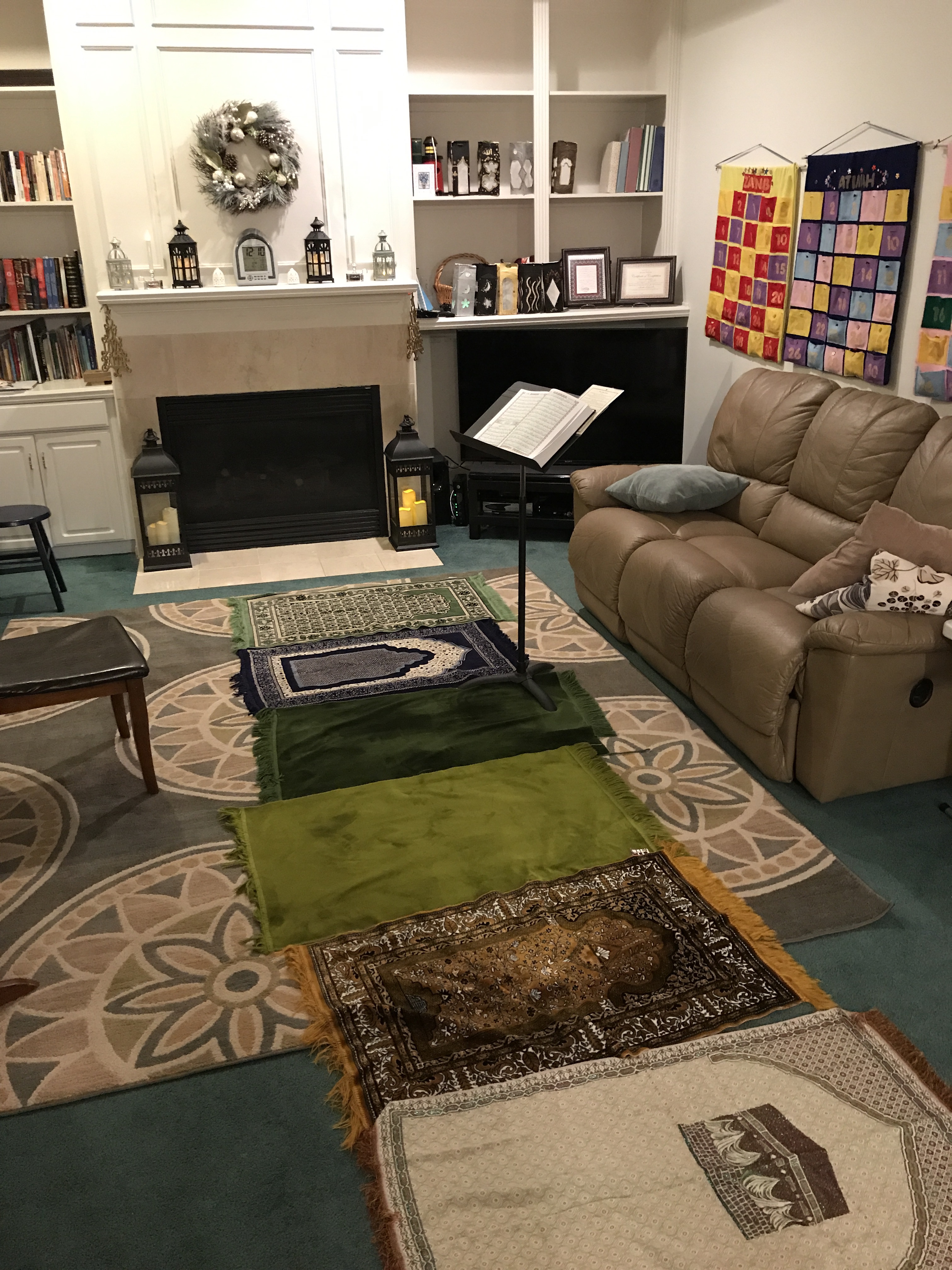
In Ramadan I turn my living room into a mosque for women.

In the last ten nights of Ramadan my local mosque becomes an overcrowded and overwhelming space for me and my daughters, especially when some of us have health issues to deal with.  So some years ago I realized that I could pray at home but still have a congregation to join me and I started inviting friends for a quiet, focused, all-women congregation.  I lead the prayer or invite friends who are also qualified reciters to lead. 

It’s a rare opportunity to enjoy hearing the Qur’an in the voices of other women, through the hearts of my female friends.  We sit together and read du`aas in English afterwards because our local mosque doesn’t offer this.  We have snacks, ask questions, share challenges and successes.  And we build quiet, sweet memories with our sisters. 


Sometimes I pray in the homes of my Muslim friends.

Other people have their own prayer rugs with their own histories.  It’s a different sensory experience, as they feel and smell different from my prayer rugs. Most people I know don’t seem to have a designated prayer space like I have but I enjoy the privilege and blessing of praying in another person’s home.   It grants me an opportunity to pray with people I might not normally get to pray with as well. 

Sometimes I pray at my parents’ home.  They are not Muslim. 

They have a designated room where we can pray- a guest bedroom, and we have a drawer in the dresser full of prayer rugs and prayer clothes. The prayer rug I keep in their home is the first prayer rug I ever had, 27 years ago.  Again, we bring the blessing of prayer and angels and dhikr to a place that would not otherwise have it.  My parents even remind my kids to pray when they are visiting and I pray that some day they will pray with them. 

Sometimes we go on a road trip and we map out all the mosques on our route and make a point to visit new communities on the way. 

It’s always part of the trip, just as important as the trip itself.  I do research before we leave and because we sometimes can’t get into the first mosque we try, we have backup plans.  We can rest and refresh ourselves both body and soul in a safe space that feels like a familiar “home” on the road.   We learn that no matter where we are, we can find other Muslims.   No matter where we are, we recite the same Qur’an and pray the same way.  Our true home is always with Allah and His Messenger and the Ummah. 

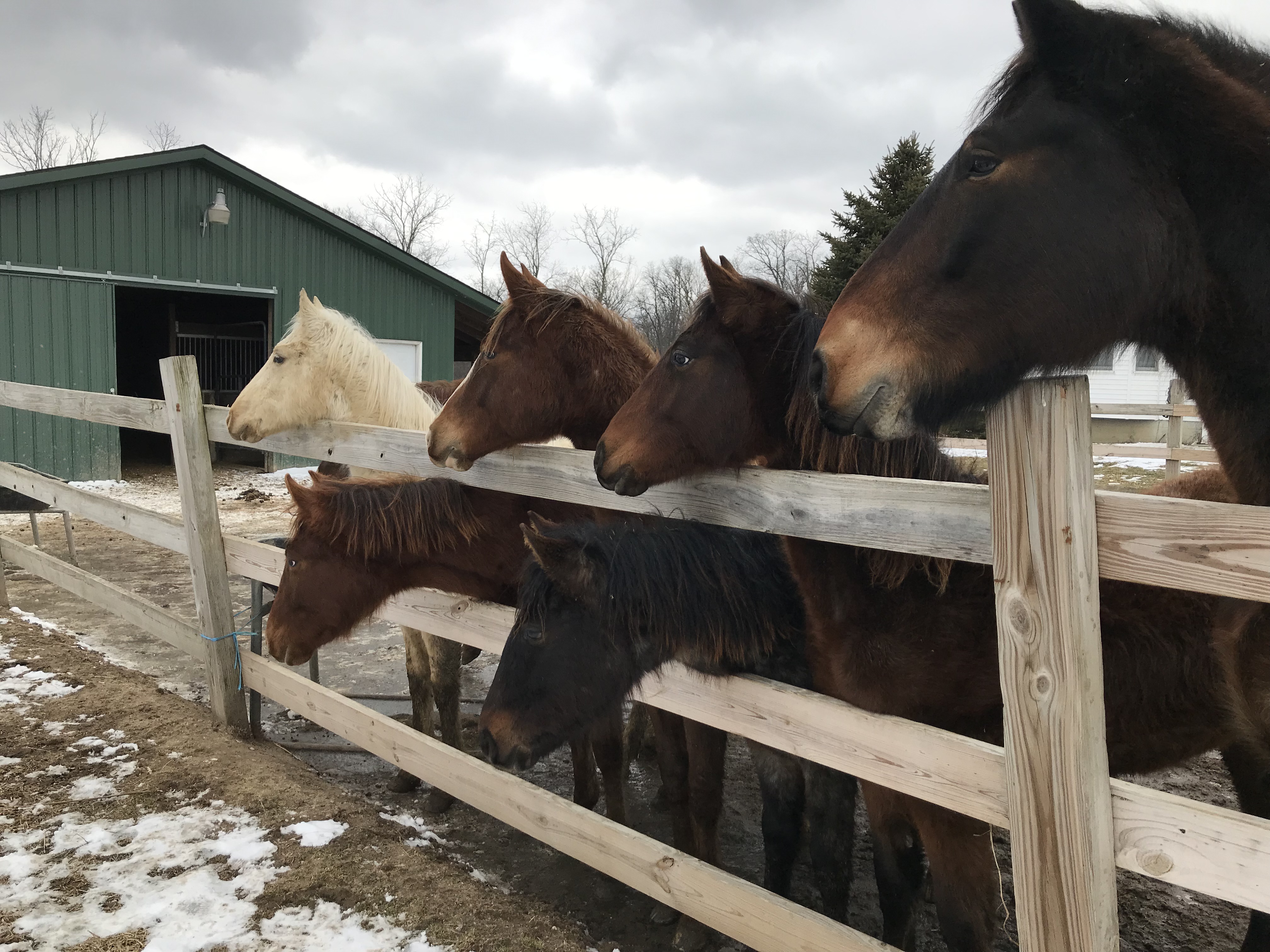
Sometimes I pray at the barn.

It is reported in Sahih Muslim that the Prophet (S) used to pray in the sheep corrals before the masjid was built in Madina, and remember that the spot for that masjid was chosen by his (S) camel.  In fact, if you think about it, animals have been present near praying Muslims for most of history. 

If the prayer time comes and I won’t be home in time, I spread a paper towel, a clean blanket, an empty feed bag, a saddle pad, a jacket, or anything clean in a corner and I pray in the barn with the cats looking in on me curiously and the rooster crowing and the horses sniffing and chewing on hay.  When I was a teenager, I prayed in the tack room, and I even had a cat jump down on my back as I was making sujud! 

But I don’t pray here only out of necessity or fear of missing the prayer time- the barn isn’t mine and the owner isn’t Muslim, but I have made that space a place of prayer and invited angels and the blessings that come in the Unseen world to the property.  It is a protection and a blessing for me and for her, and for all of our beloved horses. 

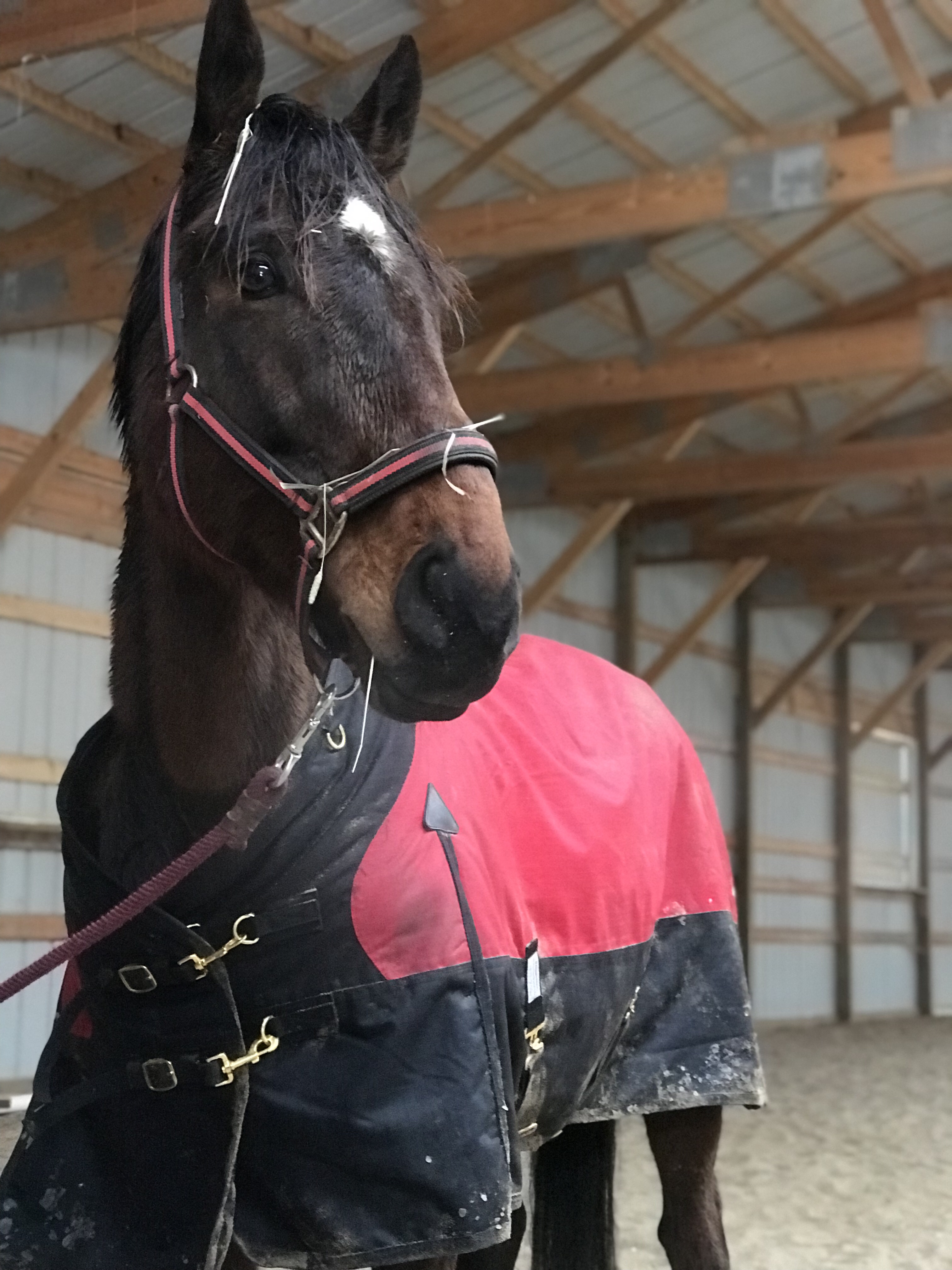
I believe it’s important to combine the things I love in the dunya with worship and remembrance.  Not only to “turn all of my actions into acts of worship” as the cliché goes but to go further and color my entire world with remembrance.  I want to connect all of the things I love it in some way with God and give them a sort of spiritual pedigree of their own.  I have been building Sully’s spiritual pedigree by memorizing Qur’an when I am with him.  He will forever be connected to Surat Hud, and Surat Hud will forever remind me of the smell of hay, leather, and horses and the tranquility of watching Sully eat his alfalfa while I memorize Qur’an on a stool or a bench nearby. 

Sometimes I have to pray in a stairwell, corridor, dressing room, parking lot, airplane cabin, sidewalk…

The Prophet (S) said in a number of narrations that the whole earth has been made pure for salah and even dirt has been made pure for us to use in the absence of water. Even though our required salah is a formal ritual, Islam is distinguished from other traditions in that our ritual is designed to be done anywhere.  We don’t need a specially consecrated space in order to perform it.

The fact that it is an obligation upon us within certain time frames means we design our lives, our time, our movements from place to place based on our salah.  We again sprinkle the places we frequent with the barakah of being a prayer space and the presence of angels.  And we again develop associations and memories in our minds between places and remembrance of Allah that would not have existed otherwise.  Instead of the classroom or the library or the office or the mall being only a “secular” place, a materialist place, a functional place they now take on extra, higher, meaning. 
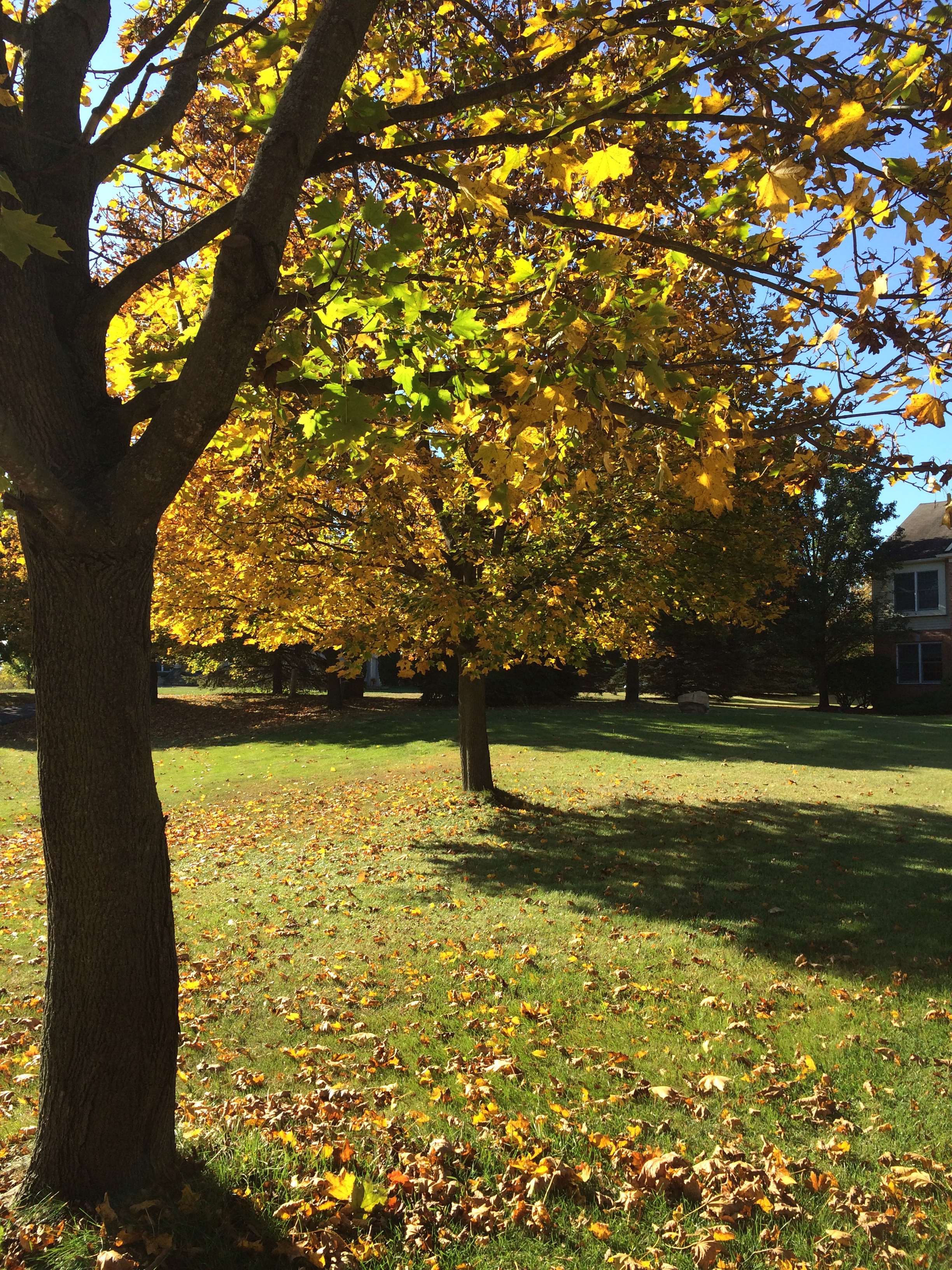
Sometimes I pray in the grass or the woods.

We often think of this as an aesthetic, Instagram-worthy spiritual experience. And it can be- the beauty and serenity of the natural world is unmatched by anything we humans can build and it can help us to be thankful and focused. As modern people we spend so much of our time in manmade spaces that we often forget that we are not the architects of our world.

And when we pray outdoors, we are reminded of this not only by beauty and serenity but also by challenges.  The ground is uneven.  There are rocks and dirt in our way.  In fact many of the books of fiqh I’ve studied have mentioned that it is makruh (disliked) to smooth our prostration surface deliberately because praying on a bumpy natural surface helps to increase humility.  Also, have you ever gotten grass up your nose or been crawled on by a bug while praying?  Or realized that there is an ever-so-slight downhill orientation to your chosen spot? 

The Prophet (S) said that “The entire earth has been made sacred and pure and a mosque for me.” [Muslim]

The places we pray are many. There are limitless blessings in all of them, both hidden and apparent.    It is a human need and instinct to connect to God in any time or place.  It is inhuman, inhumane, and even illogical to claim that there are parts of the world that are somehow off limits for all or some of us to engage in worship, remembrance, and to seek the blessings of the time and place.   Break down the barriers to worship- self-imposed and otherwise- and seek the blessings that come from seeing the whole world as place of prayer. 
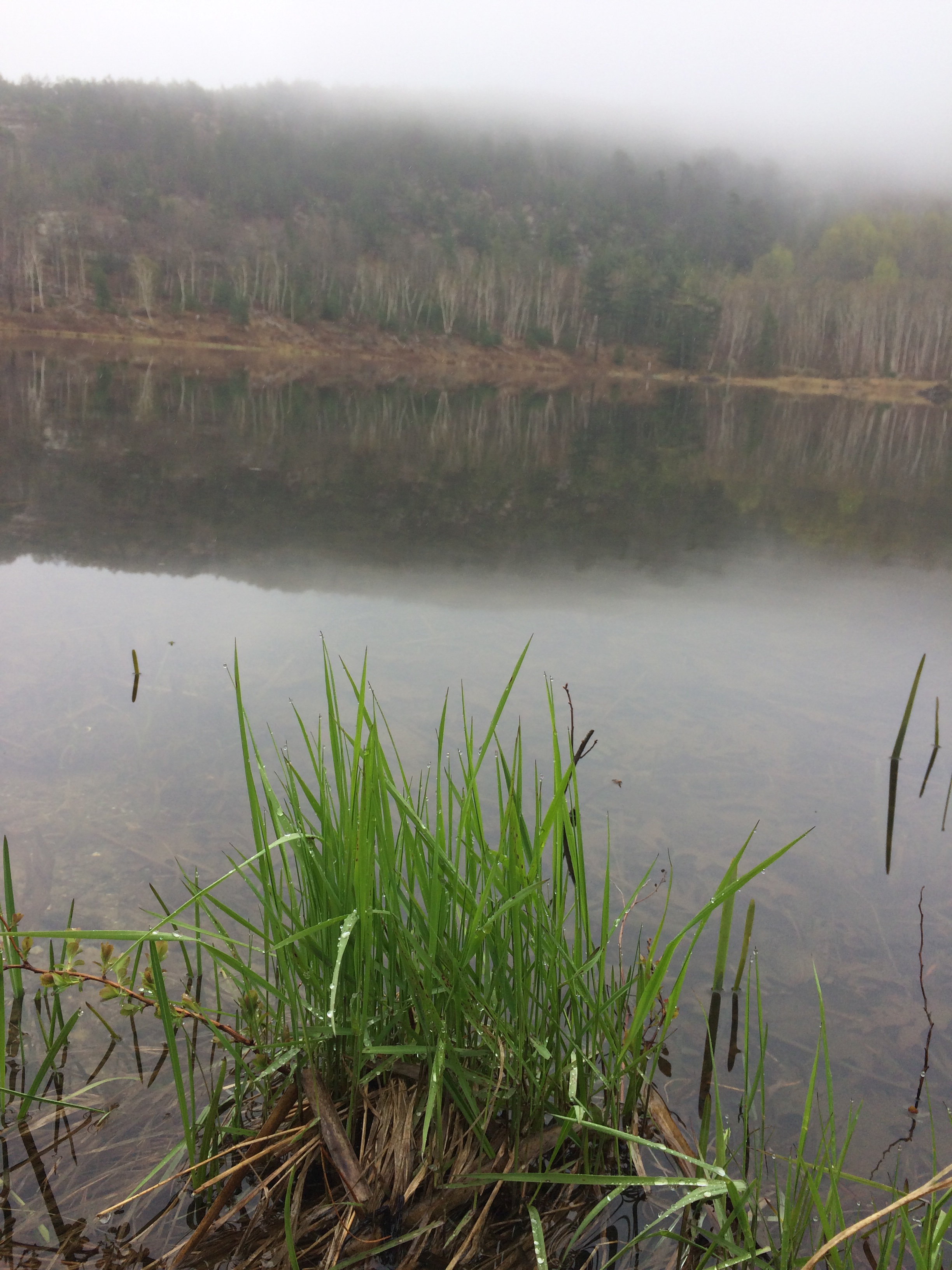
On the desire for spiritual milkshakes

Acadia National Park, Maine on a cold, foggy day in May 2017.

On the path of spiritual development, we often think we are not “feeling” anything because, deep down, what we really want is to feel like we are “all that” in front of God. We expect to experience spiritual fireworks and a feeling that we have “arrived”. When we don’t feel that way, we decide that we have failed, and that we should give up trying.

The goal of drawing nearer to God isn’t to experience fireworks. The outcome won’t be climbing mountains and flying with the stars- the outcome will be seeing deeper into the closest, simplest things and realizing that the thing we needed most was right in front of us after all.

Do you not see that when you are fasting, you spend the day craving brownies and lasagna and halal bacon cheeseburgers and milkshakes, but when you have completed the fasting day, the veil is lifted from your eyes and you realize that all you ever really wanted was a simple sip of humble, pure, water?

So stop expecting triple milkshakes with whipped cream, hot fudge, sprinkles, and a cherry on top as the reward for your attempts to draw nearer to God. God will reward you with the joy of simple, pure water- and He will make it more beloved to you than all the milkshakes in the world.

Obligations

Obligations.


All blessings come with obligations.  You can’t have one without the other.

This is 1,500 pounds of blessings.  Also 1,500 pounds of obligations and responsibilities.  “Weighty” indeed!


Would I have the blessings without the obligations? Nope.

Would I have the obligations without the blessings? Nope.

People often “ooh” and “aah” and message me and say “you’re living the dream” because I have a horse.  Yes, but keep in mind there are days that you fall off and get hurt, your horse gets hurt and runs up a zillion dollar vet bill, you can’t ride because you had a tack malfunction.  And there is also so. much. poop.


If we seek blessings, they only come through the route of responsibility. You want real love, real accomplishment, real happiness, real contentment?  Go serve God and serve others. There is no other way. Period.

American culture these days seems to teach us that obligation is inherently oppressive.  Popular culture tells us to “free ourselves”. But religious life is a life of obligation.  We have obligatory prayers, fasting, pilgrimage, zakat, and lifestyle principles such as diet and dress.

Another popular culture trend tells us that we should never do a thing unless we are 110% in love with it.  That we should only do things if and when they are “our choice”.

Many writers have commented on the idea of “choice” as a neoliberal, capitalist concept designed to sell products.  That’s an important discussion. Tradition, family obligation, being “born Muslim”, wearing hijab because you “have to” have all been invalidated by popular culture.  If that was your path to obligation, well, that’s supposedly an invalid if you didn’t have an “ah ha moment” where you asserted it as your favorite thing to do. This is toxic.  It negates the fact that life doesn’t work like that. We all come to our lives, our obligations, our blessings in different ways. We don’t always (or even usually) have a “choice” in most aspects of our lives.  How many times have we heard one lauded as a hero say “I’m not a hero, I just did what I had to do”.

There are two big concepts that get lost in these discussions:

First:
 Allah says “do not attribute purity to yourselves, Allah purifies whoever He wishes”.  (53:32) When we claim that we can or will only do things that we “choose” and love fully and are 110% committed to, we are actually attributing spiritual purity to ourselves.  We are saying that we never make these decisions our of personal or spiritual weakness or out of the lower drives of our nafs. The nafs is an important spiritual and personal development concept.  We are not walking angels. Our motivations and desires need to always be evaluated and challenged. We also will never be 110% committed and perfect even in our best states. We will always have bad days.  Life will always be more work than enjoyment. I’m 40 years old now, and this is part of what you realize about life as you get older.  It will never get “easy” Or as my grandfather likes to say: “the first 100 years are the hardest”.

Second: We need to stop understanding “obligation” as “oppressive” and “burdensome”.  Let’s unpack the idea of obligation in Islam for a moment.  Let’s use the example of Salah.

In some belief systems, a human being is “dirty” and “sinful” and not worthy to approach God directly. Even non-religious people today often express a belief that God isn’t really interested in listening to them or they limit God and claim that God is “too busy” or “taking care of more important things”.  (God is not a human being with limited time, energy, or attention. This is an `aqeedah problem, or what I call #badtheology.)

The *obligation* of salah means that God is not just interested in hearing from us 5 times a day, He is REQUIRING it of us.  There is no space for us to say or claim that God doesn’t want us, like to hear from us, or have time for us.

The *obligation* of salah means that there are blessings to be derived from it, both apparent blessings and hidden ones, regardless of whether we are giving it our full effort or attention.  Five times a day, in the middle of our busy lives, we are inevitably going to fall short. It’s going to be a challenge. We may rush or feel distracted. But because it is an obligation we are told to meet to a minimal standard no matter what, just showing up to the prayer rug has a level of blessing and goodness for us, even if we are distracted or rushed and we don’t “feel it” or “see it”.

The *obligation* of salah means that there is ALWAYS more to learn and grow from.  No matter how spiritually developed you think you are, no matter how spiritually advanced you become, salah will always be an obligation on you just the same.  The possibilities for digging deeper are literally limitless with Allah.

[Side note: When women are relieved from the obligation of salah due to menstruation and post-natal bleeding this is an indication of the significant and weighty *obligation* of the men and the people in our lives to give this woman a break.  Perhaps I’ll write more explicitly about that in the future.]

Think:  If you have an “obligation” it automatically means you have a blessing of some kind.  I have an obligation to my parents, husband, children, home, animals, job, education, and yes, the Deen of Islam and my akhirah. These are all blessings. Only a person who has nothing has no obligations.

If we have a blessing and we complain about the obligations that come with that blessing, then we are actually expressing ingratitude.  If I start complaining about cleaning up after my horse or feeding him the supplements he needs to stay healthy, or going to exercise him even when I’m tired then I need to be careful.  I am sliding into ingratitude.

And if we have a blessing and we are ungrateful for it, we risk losing it either through the direct consequences of our neglect, and/or because we opened the doors for Allah to turn it into a trial for us to snap us back to attention.  Those are the kinds of losses we grieve deeply and only realize our culpability in when it’s too late.


Now I want to talk about the obligation of hijab.  (Happy Hijab Week!)

[Side note: I tolerate no discussion of it being other than an obligation.  The Qur’an is clear on this point and no, it does not say “modesty”. That word is literally nowhere in the Qur’an.  That word got introduced into translations because “guard your private parts” was too risque for Victorian-minded translators so they wrote “guard your modesty” instead.  The word in Arabic is literally “openings”, i.e., “private parts” and they translated that as “modesty”. Hence the confusion on that point. And if you want to know about the specific words relevant to head coverings, others have written about that elsewhere.]

What does it mean for women that hijab is an *obligation*?

It means that ALL women are worthy of the sacredness and dignity that is inherent in the concept of hijab.  No exceptions. The covering of the head and body, the separation of public and private spheres, the concept of significant/symbolic clothing, are all things that are universally applicable to both men and women and hold additional significance for women.  ALL women.

It means that wearing hijab has blessings and benefits even if we don’t understand it, struggle with it, and keep on doing it even being the imperfect humans that we are.  We never get to a point where we have “arrived” spiritually or personally such that we “deserve” to wear it.

It means that there are limitless possibilities to the blessings and benefits of staying with hijab through thick and thin.  The deeper we dig, the more we learn and reflect, the more gems there are to find. The deeper we dig, the more we learn about ourselves, life, and what Allah wants for us.  


There is another level to “obligation” that goes beyond our individual selves.  Again, popular culture these days is so focused on “me” and “self”. We think we should have no obligation to the others around us.

When we all pray salah, when we pray in congregation, when we establish salah as a habit that shapes our schedules, our architecture, our lifestyles- these things have an effect on the character of our homes and societies.

When I take care of my horse, clean up after him, feed him properly, treat him humanely, I am establishing a culture at my barn of proper horsemanship.  If I didn’t, it would affect the environment at the barn, the other people and even the other horses.

(See also: Anger is Contagious) <link>

Hijab is the same way.  It is an individual practice, but we also don’t live in isolation from other people.  The things we do have an effect on others. When we embody and command respect, dignity, and sacredness in the way we dress and interact with others, we change the character of society.  And that in turn will reflect back to us.

[Side note again:  I keep hearing people say that women should be able to wear whatever they want: high-cut skirts, tight clothes, low-cut shirts, etc., and that men should just “not look”.  That’s really degrading to the idea of a supportive community. Are we not communities of people that live together? Do we not recognize that the things we do affect other people?]


Obligations are things that we MUST hold on to, for our own health and the health of our surroundings.

And most importantly, obligations are signs of blessings.  Signs of cause for gratitude.

Let’s stop treating obligations like they are burdens and start recognizing all that we have to learn and love.  

Middle Aged Women and Horses

“Now a record 90+ percent of the horse industry is made up of women. Most over 40…

…Women have brought horses into their lives for a variety of reasons. Many find the connection with an animal compares to little else in this world. It’s a place where a heart and mind can clear, where the problems of the world go away. Some want horses to explore the trails, or to challenge themselves in ways no other course in history can compare to. When a rider engages in Mastery Horsemanship. That never-ending pursuit of perfection, the human soul can literally change and heal. When a rider takes her horse into the ring to teach a new task, both engage with each other in complicated and beautiful ways. Owning horses requires leadership skills, some of which need to be honed and trained. Women can be natural leaders with the ability and desire to increase their leadership skills. To better themselves. The horse is a fantastic vehicle for all of the above. And fortunately for the horse, more and more women are becoming interested in training and leadership and connection.”

Great article: Why Middle Aged Women are the Best Thing that Ever Happened to the Horse Industry

Ground Work

In the horse world we have a saying to the effect that being a horse owner is completely different from being only a horse RIDER.  

When you are a horse rider-you take lessons for example- you show up at a defined time, you ride for approximately an hour, possibly interact with the horse for 30-45 minutes or so besides that and then you go home and forget about that horse until the next time you go for a lesson or ride.

When you are a horse owner, everything changes.  

Ironically, you often find that you are now riding LESS than you did when you were a horse RIDER.  

When you have a horse that belongs to you, even if they are boarded at a farm where someone else is responsible for most of their basic daily care, you still are ultimately responsible for them and their well-being.  I keep my phone in my bedroom and check it first thing every morning to make sure the barn owner hasn’t texted or called me.  I visit my horse almost daily and there are still lots of jobs only I can do for him.

Sometimes your horse is injured or sick.  You’re still paying for their board and care, but they’re not rideable now.  They may need to be on pasture or stall rest to recover. You could theoretically ride another horse- you’d have to pay more money to do that, and it’s also not YOUR horse.  

There’s a long-term relationship to develop.  This includes a lot of work that isn’t riding work or mounted work but what we call “ground work”.  Instead of getting up on the horse’s back and “going somewhere” you have to invest in activities and exercises where you stay on the ground.  Hand-walking, stretches, clicker training, lunging, long-lining, etc, are all things that can be done on the ground.

There are going to be many, many, times when you aren’t with your horse to ride, either because you can’t ride for some reason or because you are there at the farm to take care of other chores of daily life with horses.  

These things aren’t the things you see on the Instagram or magazine pages.  Nobody wants to celebrate you for mucking stalls, or watch videos of you standing next to your horse for 20 minutes to click and reward him for standing still or turning his head to the right or left.  Nobody sees the preparation it takes to suit your horse up in lunging gear or even the tacking up process or setting up poles for when you actually do ride. (Nobody cares about ground poles either.) Nobody is likely going to understand why you need to take your horse for walks like a dog instead of saddling up and riding off into the sunset or jumping those fences like a boss.  But these are actually the things that form the foundation of your life and relationship with your horse. They strengthen body, mind, and soul. This is the work of real life.

Ground work is literally groundING work.  Humbling work. Centering work. Relationship developing work that forms the foundation of our ability to do the “bigger things” in life.  It is “remembering what is important” work. It doesn’t always look glamorous or feel “fun” but it is where we are called to become more observant, more appreciative, and more grateful.  

Spiritually, we do “ground work” too.  We must cast aside ideas of spiritual “flying” and recognize what our “ground work” is.  What are the ways we need to train ourselves in our mundane, everyday lives to deepen our relationships with Allah, ourselves, each other, and our surroundings?  

We cannot be teachers, leaders, activists, workers, examples, parents, winners, or anything else unless we are working from a foundation of ground work.  Our salah. Our daily dhikr or wird we do. Our quiet, private, secret duaas and tahajjud. Our reading and reflecting on the Qur’an time. And our ability to remember Allah and stay connected as we go about the mundane jobs of daily life.  When we’re driving, washing, cooking, shopping, problem solving, discussing, waiting, fighting, studying…

Being a horse owner is different from being a horse rider…

And really traveling the spiritual path is different from simply observing it or dipping in and out of it once in a while.  

************************

I took this video on a day when I was annoyed that I couldn’t ride.  I’ve had a couple of busy and difficult weeks and I was feeling irritated and also guilty about the lack of time I’d been spending getting my horse into shape and working on our goals.  But I missed him so I went to the barn to just hang out with him. I also wanted to change him into his heavier weight blanket because it was supposed to be cold that night.

I can’t stop watching this video. Watching my horse lie down, roll, and frolic like this fills me with awe and gratitude and deep love and appreciation for the fact that this enormous and beautiful animal is MINE.  That I’m so privileged to have him in my life. That he has value to me- so much value- beyond his “utility” as a thing I ride and do a sport on.

This is the value of “ground work”, paying attention to what we have to learn and grow from in the mundane, everyday experiences. I might never have had this beautiful experience or learned of its openings otherwise.

Alhamdulilah for anything that teaches us and brings us closer to Him.  ❤️

*************************
Additional Equestrian resources:

4 Ways to Enjoy Your Horse WIthout Getting in the Saddle

6 Reasons to do Groundwork with your Horse

Additional Spiritual Resources:

Joy Jots: Exercises for a Healthy Heart by Anse Tamara Gray (Consider this book like “ground work” for the heart)

The accompanying Joy Jots podcast

There’s a Love…

Oh Allah, nourish us with your love, the love of those You love, and deeds that bring us close to Your love.


There’s a Love…

We live in a world where so many of us feel alone, unguided and unsupported.  We crave deep love but seldom find it.  We pray but wonder if our prayers are being heard and answered. 

There is a love that does not disappoint, and a prayer that is always answered exactly as we ask it.

The Prophet (S) said in an authentic Hadith in Sahih al-Bukhari “None of you believes until I am more beloved to his father, his children, and all people.”

The truth is that many of us, deep down, are afraid of the Prophet (S).  

Some of us are afraid because of the propaganda against him (S) from people with an agenda against Islam.

Some of us are afraid because of Muslims who attribute to him (S) their own inhumane attitudes, or crude translations and truncations of his (S) statements and actions that have misrepresented him and the One who sent him.  

Some of us are afraid because we don’t understand what it means to love in a spiritual way.  Or because we are afraid that if we put this deep love and trust in the Prophet (S) we will encounter something of the above that will break our trust and our hearts.

Some of us are afraid because if we converted from Christianity there is a fear that love for the Prophet (S) will stray into the realm of shirk that former love for Jesus (AS) strayed into.

Some of us are afraid because there are Muslims who have told us that it is dangerous to “love him (S) too much” and we don’t know what that means.  

As Shaykha Samira az-Zayid says in her (Arabic-language) book “Lessons from the Sira”, modern Muslims have accepted substitutes for the love of the Prophet (S).  Indeed, we feel longing and aching deep down, but either we don’t know that it is love of the Prophet (S) we need or we have been frightened away from loving him, and we fill that hole in our heart with substitutes that are deficient and will never fill the place in our hearts that love of the Prophet (S) is meant to fill.

We fill that hole with excessive love of husbands (who cannot live up to the unnatural standards we set for them), speakers, authors, celebrities, organizations, historical and political figures.  For converts in particular and those raised in this culture, this unconditional love feels almost impossible to truly understand, especially when the substitutes we choose so often disappoint us with shortcomings and scandals.

Love of the Prophet (S) is a love that will never disappoint.  He was chosen by Allah to be the carrier and teacher of Islam- not just to the people of his time but ALL of us.  He even knew this himself, and referred to it when he said “I miss my brothers”.  When the Sahaba asked “are WE not your brothers?” he (S) said that his brothers are those who would come after who would believe in his message without having met him (S).  He was chosen and prepared and sent by Allah specifically to be the “mercy to the worlds” and the carrier of Allah’s message, a “walking Qur’an” to all people until the Day of Judgment.  

A man came to the Prophet (S) and admitted that he had not prepared anything much for the day of judgment in the way of great worship, but, he declared, “I love Allah and His Messenger” to which the Prophet (S) replied “you will be with those you love”. 

The Prophet (S) also said “the closest of you to me on the Day of Judgment are those who say prayers on met (salawat) the most”.  [Tirmidhi]

Prayers on the Prophet (S) are a prayer that is always answered just as we ask it.  When we ask Allah for anything else, we always receive an answer of some kind- either we get what we ask for eventually, we get something better, or a harm is averted from us.  We can ask for a million dollars, we won’t  necessarily get it.  Yet when we say “Allahumma Salli `ala sayyidna Muhammad” we get exactly what we ask for.  

But we get more!  Not only is this prayer and blessing delivered to the Prophet (S) just as we ask, but he (S) is allowed to greet us and pray for us in return. He (S) said in an authentic Hadith in Sahih Muslim “There is not one of you who greets me with salam except that Allah returns the soul to my body and I greet him with salam in return.”  

Allah takes this greeting, this prayer for us, and multiplies it by TEN.  The Prophet (S) also said in an authentic Hadith in Sahih Muslim: “Whoever prays upon me, Allah returns it to him ten times.”  So we are guaranteed to not only have our duaa for the Prophet (S) answered just as we ask it, but his (S) duaa for us is answered and multiplied by Allah.  Imagine how much blessing this can bring into our lives!

We have to know someone in order to love them.  But learning about the Prophet (S) isn’t practiced here.  We don’t study his (S) life deeply and completely, constantly analyzing his ways in order to discern signs and teachings for our way of life.  Instead, we take his (S) statements in isolation, piecemeal- a statement here, a statement there- and try to determine his intent and make judgments about him without even knowing him (S) in the first place!  And when we know the Prophet (S) we will not only love him but we will want to emulate him and obey him.   

It is important that we observe the way the Prophet (S) engaged in the upbringing of people, who those people were, the way they learned from him (S), LOVED him (S) and respected him (S) and also the way they learned together, supported each other and loved each other.  These values and behaviors have become lost in modern times, and to our severe detriment.

Modern Americans revel in the myth of “the self-made man” who needs only their own greatness to survive and thrive. “Independence” is considered supreme, and dependence equal to weakness and stupidity.   We suffer from deep cynicism about relationships as marriages break up, children reject their parents, and people move frequently without putting down deep roots. Modern religious and political movements have plugged into these trends by teaching people to avoid attachment to teachers, to avoid deep love, to learn only superficially by reading a few articles and books, and to favor the lowest common denominator when it comes to worship and learning.

We will not progress spiritually or in our lives, either as individuals or communities, until we bring back an emphasis, rooted in the sunnah of the Prophet (S), on love and relationships: with Allah and His Messenger and with each other.  Relationships for the sake of Allah, seeking Allah.  “You will be with those you love.”  It starts with “Allahumma Salli `ala sayyidina Muhammad.”

The most beautiful dream that can never die

The older I get the more I realize that we don’t get to choose how life turns out. Plans are thwarted, dreams die, hearts are broken, and more often than not the fondest and most important dreams and desires of our hearts for one reason or another simply don’t happen or at least not in the way or in the time we had hoped.

But this… This Quran…. It’s a dream that doesn’t go anywhere and can never be crushed. No matter how many disappointments and difficulties pass through our lives, no matter how many things are taken away from us- this Quran will always be there and the dream of carrying it can never die.

I may not be the person I thought I could be. I may not have the things I thought I would have or know the things I thought I would know. It may be too late to change so many things, but this Quran can always be part of me, can always fit in my heart and my time and my life. Of all the dreams that may never come true, I will keep fighting for this one.

The Uhuds of Our Lives

The Battle of Uhud is a sign for all times because we are all likely to experience our own Uhud.

Women in particular seem to suffer the most from Uhuds, and there is hardly a woman I know who is not in the midst of one. (Is it any wonder that we know a lot about the role of women fighters and medical personnel from that battle?) In our modern Uhuds, on one side women are abandoned by those who pledge to support them and on the other side we watch helplessly as those we are trying to love and protect rush headlong into dunya and disobedience and catastrophe. And the consequences fall disproportionately upon women as well.

What have we prepared that will get us through our own Uhuds?

In Surat Aal Imraan, verse 154, Allah says of the two parties at Uhud:

After sorrow, He caused calm to descend upon you, a sleep that overtook some of you. Another group, caring only for themselves, entertained false thoughts about God, thoughts more appropriate to pagan ignorance, and said, ‘Do we get a say in any of this?’ [Prophet], tell them, ‘Everything to do with this affair is in God’s hands.’ They conceal in their hearts things they will not reveal to you. They say, ‘If we had had our say in this, none of us would have been killed here.’ Tell them, ‘Even if you had resolved to stay at home, those who were destined to be killed would still have gone out to meet their deaths.’ God did this in order to test everything within you and in order to prove what is in your hearts. God knows your innermost thoughts very well.

(Read 152-154 for the complete picture.)

Look at the difference between the three parties involved:

The believers, in defeat and exhaustion and thirst so great that it caused the Prophet (S) to collapse to the ground and lead a congregational prayer sitting that way were nonetheless filled with a sleep and a sense of sakeenah from Allah.

The Quraysh, victorious but suffering heavy losses, nevertheless were filled with agitation. Their slaughter of the believers did nothing to extinguish the flame of hatred and discontent in their hearts. Victory on the battlefield wasn’t enough, they had to proceed to mutilation and cannibalism. And they attempted an attack on Madinah on their way home.

The Hypocrites felt a similar agitation. They fell into a sense of the ugly “dhann”, the negative thoughts about Allah, the “dhann of jaahiliyyah” of the time of ignorance before Islam. “If only we had control of the situation we would have done X Y and Z differently and we wouldn’t have suffered this defeat”.

When our Uhud comes, who will we be?

Will we be like the believers, searching for, finding, and even being granted rest and reassurance from Allah? As He says in 65:2-3 “Whoever has taqwa of Allah He will provide for them a way out and provide for them from places they would never have expected”. Will we pray, even from our position of collapse on the ground? Will we make the effort to pray that prayer in community, with the others who are also broken like the Prophet (S) did? When we are told that all looks hopeless, will we continue pushing forward in hope and reliance on Allah alone and trusting in the promise of the Akhira?

Will we be like the disbelievers, for whom Uhud was an act of revenge for their losses at Badr, who can’t think of anything except rage and revenge and more and more destruction?

Will we be like the hypocrites, those who are only in this as long as we feel like we are “winning” in the dunya? When hypocrites stop “winning” they start questioning their commitment. Their only concern is for themselves and they only see power and direction as emanating from themselves, rather than coming from Allah. They disbelieve in the Divine story written for each of our lives, that everything is brought about by Allah in order to teach us something and to purify us. The word translated as “prove what is in your hearts” is the word HmS which means to purify gold by heating it, until it is free from defect. If we don’t look for the ways we are meant to learn and grow from even the worst of catastrophes, and instead berate ourselves for what we could have or should have done, we are acting in similarity to the hypocrites.

As women we so often feel the crushing burdens of responsibility and of grief when things go wrong. We tend to fall into self-blame and despair. We tend to say “if only I had done…” We tend to isolate ourselves. The cure for what is in our hearts is prayer and remembrance. To seek companionship and community. To look forward to the future. To sharpen our skills of self-compassion and compassion for others.

Wisdom is always gained through hardship. I have long believed that this is the meaning of the second “inna ma`a l-usri yusra” (“With hardship comes ease,” 94:7-8.) The first one pertains to what we are granted of often unappreciated blessings and help in the thick of hardship. The second one pertains to the wisdom, empathy, and personal purification we earn and learn which we can then bring forward into the world for the future.

When catastrophes come, Allah has given us the duaa that will bring His presence and HIs help. In Surat al-Baqarah 155-157 He says:

“We shall certainly test you with fear and hunger, and loss of property, lives, and crops. But [Prophet], give good news to those who are steadfast,

Those who say, when afflicted with a calamity, ‘We belong to God and to Him we shall return.’

These will be given blessings (Salawat) and mercy (raHmah) from their Lord, and it is they who are rightly guided.”

May Allah help us and strengthen us through our personal Uhuds. May He grant us the discernment and the strength to find our way through them according to the example of the Best of Mankind (S) and those who believed with him. May He grant us both stages of “yusr” and help and grant us all that we will see our true reward in the Hereafter.

Sailing the seas of middle age on the ship of FAITH.

Why am I writing this blog?  What is it about?

The beautiful song “Landslide” by Fleetwood Mac might summarize:

I took my love, I took it down

Climbed a mountain and I turned around

And I saw my reflection in the snow covered hills

‘Til the landslide brought me down

Oh, mirror in the sky, what is love?

Can the child within my heart rise above?

Can I sail through the changin’ ocean tides?

Can I handle the seasons of my life?

Well, I’ve been ‘fraid of changin’

‘Cause I’ve built my life around you

But time makes you bolder

Even children get older

And I’m gettin’ older, too

As adults we try to “create” our lives.  We get degrees and choose professions, seek out and marry partners and create families, establish homes, drive cars, live our routines, and develop an identity around all these things we are trying to achieve.  But by middle age, that mountain we’ve built usually experiences a landslide. And when the landslide happens, how will we respond? Will we still know ourselves? Will we still be able to hold onto ourselves?

A dear friend of mine who is older once told me that life has “seasons”.  At the time I was in the “season” of young kids. Now I am in season beyond, where my “children (are) older and I’m gettin older too” and I realize that I wasn’t able to “create” my life just the way I wanted.  There was so much about life that I couldn’t control. There was a story I was asked to live that wasn’t written by me, rather written by “the One who has created life and death so that He may try you which of you are best in deeds…” (67:2)

Middle age is the time to grieve, and the time to, as Brene Brown says, “Rise Strong”.  I have had to grieve the death of many of my hopes, dreams, expectations, and assumptions about myself and my life. I have had to process trauma that has in many ways paralyzed me.  To face the change I was afraid of, the crumbling of what I thought I had “built my life around”.

And I have had to move on, past the grief, the disappointment, the trauma, and the paralysis to claim and reclaim my heart, my purpose, my identity, and my goal.  To take the lessons of my life and become more whole. To walk forward WITH FAITH.

Imam Ash-Shafi’i famously wrote:

Indeed, Allah has intelligent Servants / They divorced the dunya and feared fitnah

They looked into it and when they beheld / That it is not a homeland for the one who is Alive

They took it as a deep sea and took / Good deeds in it as their ship

The landslide came and I took to the sea.  Join me and my companions on this journey.